

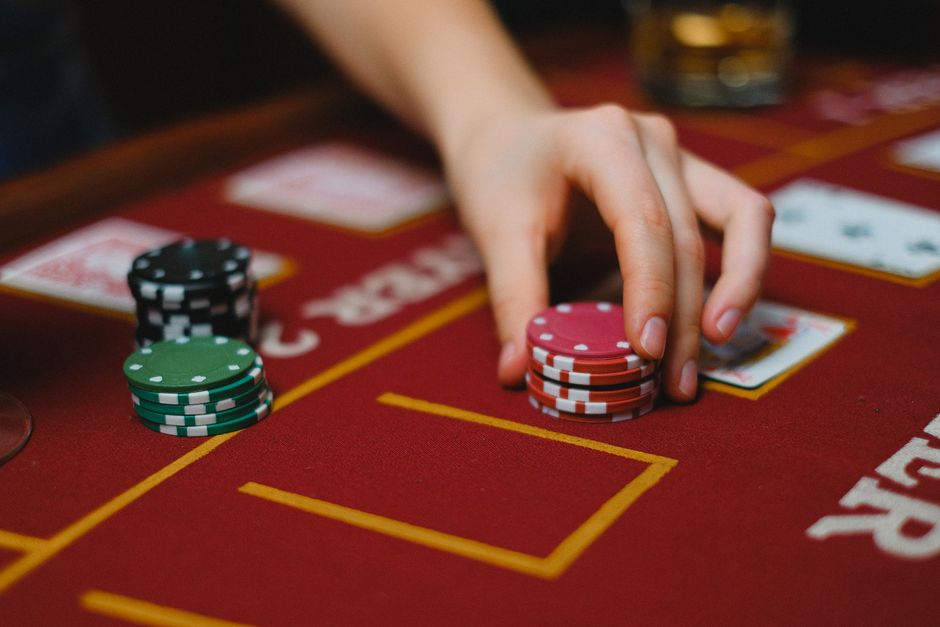
Walk into any online casino lobby and you're greeted by thousands of flashing thumbnails, welcome bonuses screaming for attention, and live dealer tables streaming in 4K. It's designed to overwhelm you. But strip away the neon and the marketing, and iGaming is really just a handful of core products — slots, table games, poker, sports betting — each with its own mathematics, its own rhythm, and its own type of player. Understanding that difference is the single biggest edge a casual player can gain. Not a system, not a hot streak, just knowing what you're actually sitting down in front of.
Let's break down how these games really work, where the house edge hides, and what separates a smart session from an expensive lesson.
Slots: The Simple Game With the Complicated Math
Slots look like the simplest thing in the casino. Press a button. Watch reels spin. Hope for three matching symbols. The reality is far more engineered than most players realize. Modern video slots run on something called a random number generator (RNG), which is constantly cycling through thousands of numbers per second, even when you're not playing. The moment you hit spin, it freezes on one outcome. Nothing you do — timing, tapping, ritual — changes that result.
The number that actually matters is RTP, or return to player. A slot with 96% RTP returns, on average, €96 out of every €100 wagered over millions of spins. That 4% is the house edge. Sounds small, but volatility is the other half of the story.
- Low volatility slots (like many 96-97% RTP classics) pay small amounts frequently — good for longer, gentler sessions.
- High volatility slots (think Megaways titles with 20,000x max wins) pay rarely but can hit huge. They'll drain a bankroll fast if you're not patient.
- Max win caps are now standard — often 5,000x to 50,000x your stake — and are written in the paytable, not the marketing.
Here's a concrete example. Two slots, both 96% RTP. Slot A hits the bonus every 150 spins on average and maxes at 500x. Slot B hits the bonus every 800 spins and maxes at 10,000x. Same RTP, wildly different experiences. If you sit at Slot B with a €50 bankroll and €1 spins, you may never see the bonus at all. That's not bad luck — that's the design.
Practical tip: always check the RTP in the game's help menu. Some providers quietly run the same slot at 94%, 96%, and 97% depending on the operator. That 3% swing is enormous over thousands of spins.
Table Games: Where the Edge Is Fixed and Beatable by Strategy
Unlike slots, most table games have a static, calculable house edge — and player decisions actually change it. This is where skill starts to matter.
Blackjack
Basic strategy — a mathematically optimal chart for every hand combination — can push the house edge below 0.5% on good rules. Play badly, hit when you should stand, and you'll hand the casino 2% or more. Same table, different outcome purely from decisions.
Roulette
European roulette has a 2.7% house edge thanks to the single zero. American roulette has a 5.26% edge because of the double zero. That's nearly double the cost per spin for zero extra entertainment. Always pick European if it's available.
The key insight: in table games your edge is knowable. You can look up the optimal strategy, practice it for free, and walk in with a real plan.
Poker: The Only Game Where You Play Against People, Not the House
Poker is the odd one out. The casino takes a rake — typically 5% of each pot, capped — and then gets out of the way. You're not fighting the house edge; you're fighting other players. That means a skilled player can genuinely win long term.
But 'skilled' is doing a lot of work there. Modern online poker, especially at low and mid stakes, is brutally efficient. Solvers and tracking software have raised the floor of competence enormously. If you're new, here's the honest order of operations: สล็อตเว็บตรง covers this in more detail.
- Learn preflop ranges cold — which hands to open from each position, which to fold.
- Understand position. The button is the most profitable seat at the table for a reason.
- Track your results in big blinds per 100 hands (bb/100), not in euros. It's the only real measure of skill.
- Play fewer tables while learning. Multi-tabling eight tables as a beginner is how you lose slowly across all eight.
- Move up only when you've beaten your current stake over at least 50,000 hands.
Poker rewards patience and study in a way slots never will — and that's exactly why it appeals to a certain type of player.
Sports Betting: Pricing, Margins, and Line Shopping
Bookmakers build a margin into every market. If a tennis match is genuinely 50/50, fair odds would be 2.00 each side. In practice you'll see 1.90 and 1.90 — that gap is the overround, and it's how the sportsbook profits regardless of the result.
Sharp bettors fight this by line shopping: opening accounts at multiple books and always taking the best price. A 1.95 versus a 2.00 on the same bet is a 2.5% swing in expected value, and over hundreds of bets it compounds dramatically. It's the single most underrated edge in betting.
Bankroll Management: The Unsexy Rule That Saves You
Every product above — slots, blackjack, poker, betting — has one thing in common: variance will humble you. Bankroll rules aren't about luck, they're about survival.
- Decide your total monthly bankroll before you play. Not after a loss.
- For slots, stake no more than 1% of your bankroll per spin.
- For poker cash games, buy in for 5-10% of your bankroll, never more.
- For sports betting, 1-2% per bet is standard sharp practice.
- Set a stop-loss (down 30% today? Walk away) and stick to it.
None of this guarantees winning. Nothing does. What it guarantees is that a bad session stays a bad session instead of becoming the night you stopped playing altogether.
The Bigger Picture
iGaming isn't one thing. It's a stack of distinct games, each with its own math, tempo, and role for the player. Slots are pure entertainment with a known, fixed cost over time. Table games reward discipline and knowledge. Poker is a skill contest with a tax. Sports betting is a pricing market where shopping lines beats picking 'winners.'
The operators know which is which. They design lobbies, bonuses, and algorithms around player psychology — and that's fine, as long as you know it too. The player who understands RTP, house edge, rake, and overround isn't immune to losing. But they lose on their own terms, in amounts they chose, playing games they actually understand. In an industry engineered to keep you spinning, that clarity is the real prize.
So before you load that next game, ask the boring question: what's the edge, and whose is it? The answer tells you more about your session than any bonus banner ever will.


Coding is used in almost all aspects of life and work now, be it directly or indirectly. It’s not just for companies in the tech sector. “An increasing number of businesses rely on computer code,
Coding is used in almost all aspects of life and work now, be it directly or indirectly. It’s not just for companies in the tech sector. “An increasing number of businesses rely on computer code,
Coding is used in almost all aspects of life and work now, be it directly or indirectly. It’s not just for companies in the tech sector. “An increasing number of businesses rely on computer code,