

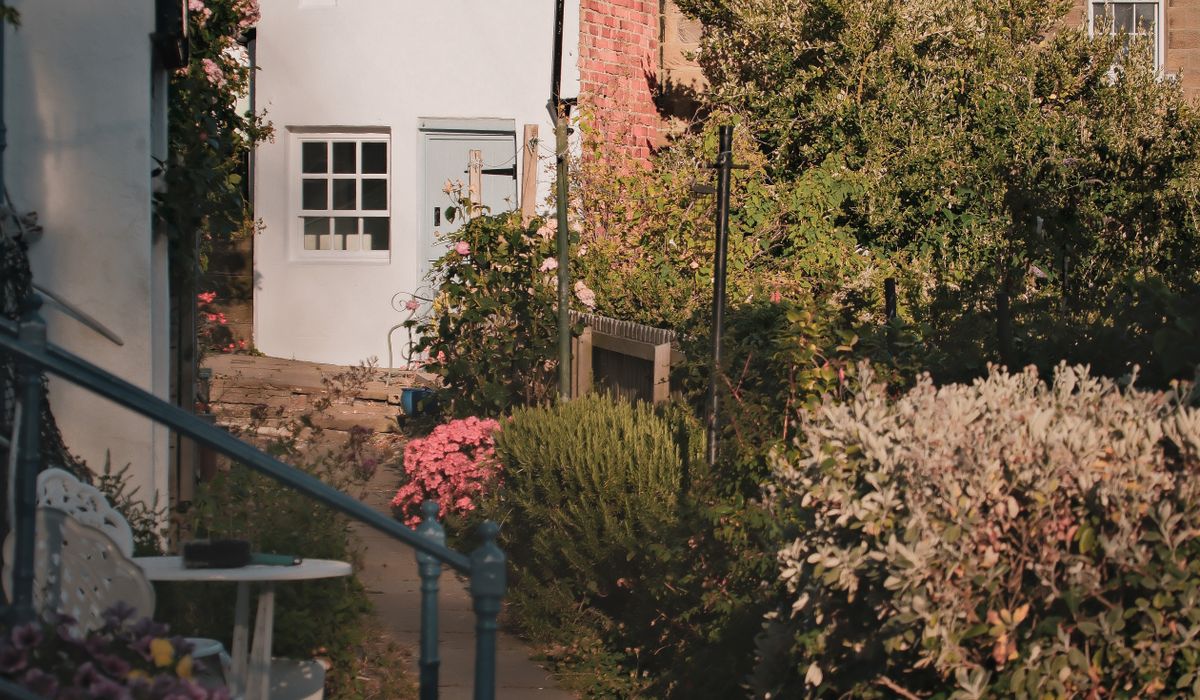
Why hardy perennials earn their keep
A border that looks after itself does not happen by accident, but neither does it demand endless weekends of work. The trick is to choose hardy perennials — plants that die back to the ground in winter and push up fresh growth each spring from the same crown — and then give them a proper start. Once their roots are down, most will shrug off a fortnight of dry weather, smother the weeds around them and return year after year without being lifted, divided or fussed over. It is a world away from annual bedding that has to be replaced every June and watered twice a week in between.
Hardy perennials also give you something bedding never can: a border with a memory. It improves as it settles, filling out and knitting together into a community of plants that largely looks after itself.
Start with the ground, not the plants
Nine out of ten disappointments in a perennial border come down to soil preparation rather than plant choice. Before anything goes in, clear the site of perennial weeds — couch grass, ground elder, bindweed, creeping thistle — because a border packed with plants is far harder to weed than bare earth. Dig over the area to a spade's depth and work in a generous layer of well-rotted manure or garden compost, roughly a barrowload per square metre on heavy clay or thin sandy ground.
If your soil sits wet in winter, fork in grit and plant on slight ridges so crowns never drown. On chalk or sand, that compost is the difference between plants that merely survive and plants that romp. Finish with a mulch of 5–7cm of bark or compost, kept clear of stems, and you will have halved both your watering and your weeding before a single flower opens.
Reliable plants that do the heavy lifting
These are the stalwarts worth building a border around. All are long-lived, tolerant of a wide range of soils and, once established, need watering only in a genuine drought.
- Geranium macrorrhizum — evergreen ground cover for dry shade, with pink or white flowers in early summer and aromatic foliage that weeds struggle to push through.
- Geranium 'Rozanne' — flowers from June to the first frosts, sprawling and unfussy, ideal at the front of a sunny border.
- Nepeta racemosa 'Walker's Low' — grey-green foliage and a long season of lavender-blue spikes; thrives on gravel and bakes happily in full sun.
- Alchemilla mollis — frothy lime-green flowers that seed gently into paving; best at the border's edge where its self-sowing can be managed.
- Salvia nemorosa 'Caradonna' — deep violet spikes over a long period, neat enough for the middle of the border.
- Astrantia major — pincushion flowers in muted pinks and whites, happiest in the damp shade where little else will flower.
- Hylotelephium 'Herbstfreude' — late flat heads of pink that feed bees into October, then leave handsome seedheads for the winter.
- Persicaria amplexicaulis — slender crimson wands from midsummer into autumn, and it positively enjoys heavy clay.
- Brunnera macrophylla — forget-me-not flowers in spring and bold silvered leaves that cover the ground in shade.
- Verbena bonariensis — tall, airy stems that seed about obligingly and make the border feel lighter.
Plant in drifts, not dotted about
The single biggest mistake in a new border is buying one of everything and spacing them out like specimens. That leaves bare soil between plants, which means weeds, evaporation and a border that never quite looks settled. Group three, five or seven of the same plant instead, in generous drifts that repeat along the border. Odd numbers look natural, and repetition ties the whole scheme together.
Space them according to their eventual spread, not their size in the pot, and resist filling the gaps with quick annuals. The perennials will close ranks by their second or third summer and do the weeding for you. If the bare earth bothers you in year one, a scattering of hardy annuals such as calendula or nigella is fine — just don't let them seed into the perennials' root run.
The small amount of upkeep that pays off
Low maintenance is not no maintenance, but the jobs are few and forgiving:
- Leave the stems standing over winter for seedheads, birds and frost, then cut everything to the ground in late February or early March before new growth appears.
- Chelsea chop in late May: cut back asters, heleniums and sedums by a third. You will get shorter, sturdier plants and flowers a few weeks later.
- Water only for the first two summers. After that, deep roots do the work, and cosseting them makes plants lazy.
- Feed sparingly. A light scatter of compost in spring is plenty; rich soil makes perennials flop and need staking.
- Divide congested clumps every five or six years in autumn or early spring, and give the spare pieces away.
Coping with dry shade, clay and coastal wind
Every garden has an awkward corner, and the answer is nearly always the right plant rather than more effort. In dry shade under trees, use Geranium macrorrhizum, Brunnera, epimedium and hellebore, and plant small, watering through the first summer until roots reach the damper soil below. On heavy clay that floods in winter, choose Persicaria amplexicaulis, astrantia and hardy geraniums, and never plant in a waterlogged hole. Where wind scorches foliage, favour grasses such as Deschampsia cespitosa and tough, leathery-leaved perennials, and stake only what genuinely needs it. Get these fundamentals right and the border will look after itself for years, asking only a morning's tidying each spring.


Coding is used in almost all aspects of life and work now, be it directly or indirectly. It’s not just for companies in the tech sector. “An increasing number of businesses rely on computer code,
Coding is used in almost all aspects of life and work now, be it directly or indirectly. It’s not just for companies in the tech sector. “An increasing number of businesses rely on computer code,
Coding is used in almost all aspects of life and work now, be it directly or indirectly. It’s not just for companies in the tech sector. “An increasing number of businesses rely on computer code,